Retain or retire
Keep a stable system with clear ownership when change creates little value, or retire applications that duplicate capabilities and no longer justify their cost and risk.
Legacy and application modernization
Scallar helps businesses assess older applications, map hidden dependencies, choose the right modernization path, and deliver migration in controlled stages. The objective is not to replace technology for its own sake. It is to reduce risk, improve changeability, and protect the processes and data the business still depends on.
Start with evidence
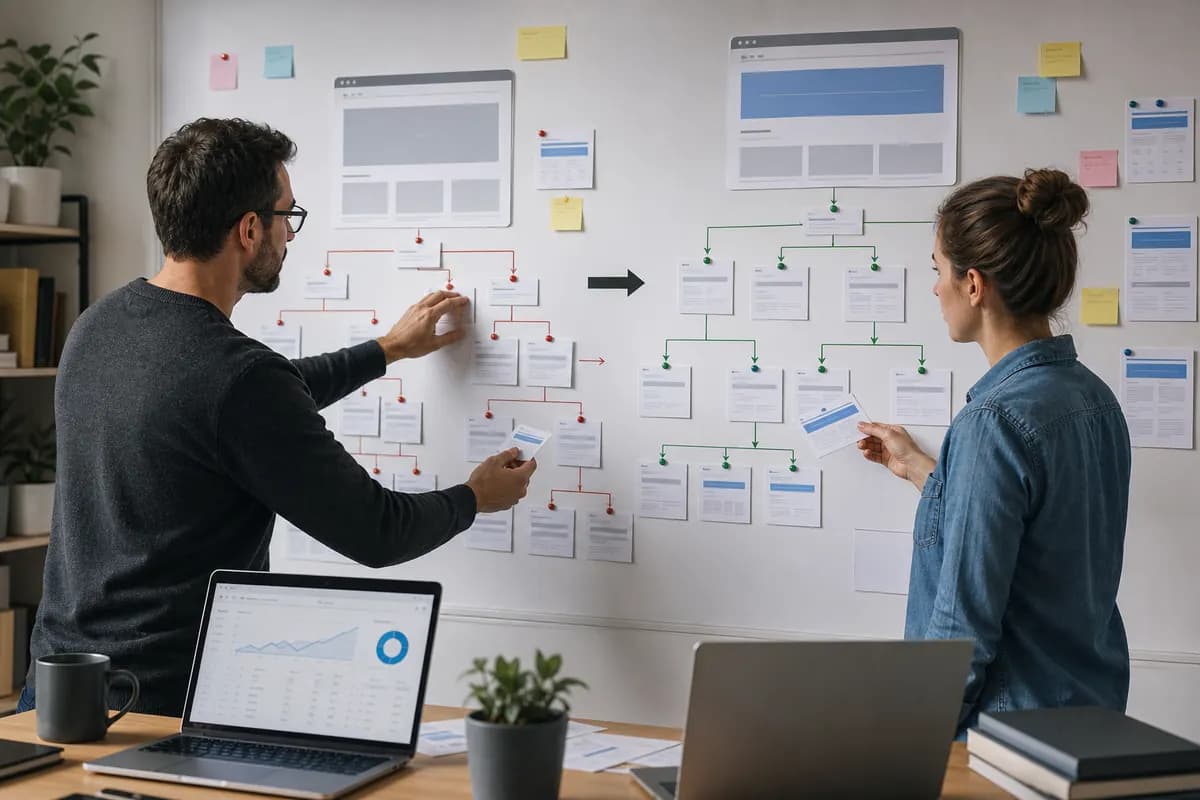
An older application may look like an obvious replacement candidate, yet it can contain years of business rules, customer records, finance logic, operational workarounds, and integrations that nobody has documented completely. Removing it quickly can expose more risk than keeping it. Leaving it untouched can also become expensive when skills disappear, releases slow down, infrastructure reaches end of life, or one fragile integration blocks wider change.
The first step is therefore a structured assessment. Scallar reviews business criticality, user journeys, technical condition, data, integrations, security boundaries, licensing, vendor constraints, operating ownership, change frequency, and the roadmap the business is trying to deliver. This produces a defensible decision for each system rather than a universal instruction to move everything to the cloud.
The resulting legacy application modernization solution may combine retention, retirement, rehosting, replatforming, refactoring, rebuilding, or replacement across different parts of the estate. Treating these as a portfolio of modernization solutions keeps each decision tied to business value, dependency risk, and the organisation's ability to operate the target state.
If the organisation still needs to agree on priorities across multiple initiatives, begin with IT strategy consulting and roadmap planning. When modernization forms part of a broader process, data, customer-experience, and operating-model change, connect it to the digital transformation programme instead of treating it as an isolated infrastructure project.
Disposition choices
A portfolio rarely needs one answer. Different systems can follow different paths while sharing architecture, data, security, testing, and governance standards.
Keep a stable system with clear ownership when change creates little value, or retire applications that duplicate capabilities and no longer justify their cost and risk.
Move a suitable application to a different hosting environment with minimal code change. This may reduce infrastructure constraints, but it does not remove application debt by itself.
Change selected platform components such as databases, runtimes, deployment, or managed services while preserving most of the application and its business behaviour.
Restructure high-friction parts of the codebase, integration layer, or data access so the application becomes easier to change, test, scale, and operate.
Create a new application when the existing design cannot support required journeys, rules, integrations, security boundaries, or operating ownership.
Adopt a suitable product when the capability is not a source of differentiation and configuration, migration, integration, and process change are manageable.
The application modernization strategies guide explains how these choices affect architecture, delivery effort, operating ownership, and future change. A quick hosting move can be sensible, but it should not be described as complete modernization when the same application constraints remain.
Delivery roadmap
The roadmap creates a sequence the business can operate through. It makes data movement, integration changes, user training, supplier decisions, testing, cutover, and decommissioning visible before deadlines force rushed choices.
Use the legacy system migration checklist when an initiative is moving from assessment into delivery. For workloads being considered for a hosting transition, the cloud migration strategy for legacy applications covers suitability, landing zones, data, testing, and operating responsibilities.
Establish business outcomes, operational constraints, decision owners, and continuity requirements.
Inventory applications, infrastructure, data, integrations, users, licences, vendors, and undocumented dependencies.
Assess business value, technical condition, change frequency, risk, cost, and future capability needs.
Choose a disposition for each application and define the target architecture and transition states.
Sequence pilot, migration, integration, data, testing, adoption, and decommissioning workstreams.
Deliver in controlled releases with acceptance evidence, monitoring, rollback, and operational handover.
Application code is only one part of modernization. Data may contain duplicate records, unknown owners, inconsistent identifiers, retention requirements, and reporting dependencies. Integrations may rely on shared files, direct database access, scheduled jobs, or undocumented manual steps. Scallar profiles these dependencies and defines migration, reconciliation, interface, and ownership rules before cutover.
Where a controlled interface layer is useful, API integration services can separate new journeys from older systems while modernization proceeds in stages. That pattern is useful only when the interface has clear ownership, monitoring, error handling, and versioning.
A successful release is not simply a deployment that completes. Users need to complete critical tasks, reconciled data needs to be trusted, integrations need observable failure states, support teams need escalation paths, and the business needs a rollback or recovery decision. These requirements belong in the modernization scope rather than being left for the final week.
Handover records the new operating model: service owners, access, environments, deployment, monitoring, backups, recovery, vendor contacts, known limitations, and the next improvement backlog. This prevents a modernized application from becoming the next undocumented legacy system.
Frequently asked questions
Legacy system modernization services assess older applications, infrastructure, data, integrations, and operating dependencies, then plan the safest combination of retaining, retiring, rehosting, replatforming, refactoring, rebuilding, or replacing them.
The decision should compare business value, technical condition, security and continuity risk, operating cost, data quality, integration needs, internal skills, vendor constraints, and the change the business expects over the next few years.
Sometimes. Rehosting or limited replatforming can move a suitable workload with fewer code changes, but the hosting target, dependencies, licensing, performance, data, resilience, and operating model still need assessment before migration.
Risk is reduced through dependency mapping, data profiling, migration rehearsals, test environments, clear acceptance criteria, parallel running where justified, rollback planning, monitoring, user involvement, and controlled migration waves.
Usually not. A phased roadmap protects business continuity and lets the team learn from early releases. High-risk dependencies and quick operational improvements are sequenced according to evidence rather than replaced in one large cutover.
Modernization assessment
Scallar can help inventory the current environment, clarify modernization options, map dependencies, define a phased target state, and prepare an implementation roadmap your business and technical teams can review together.
Plan the Assessment