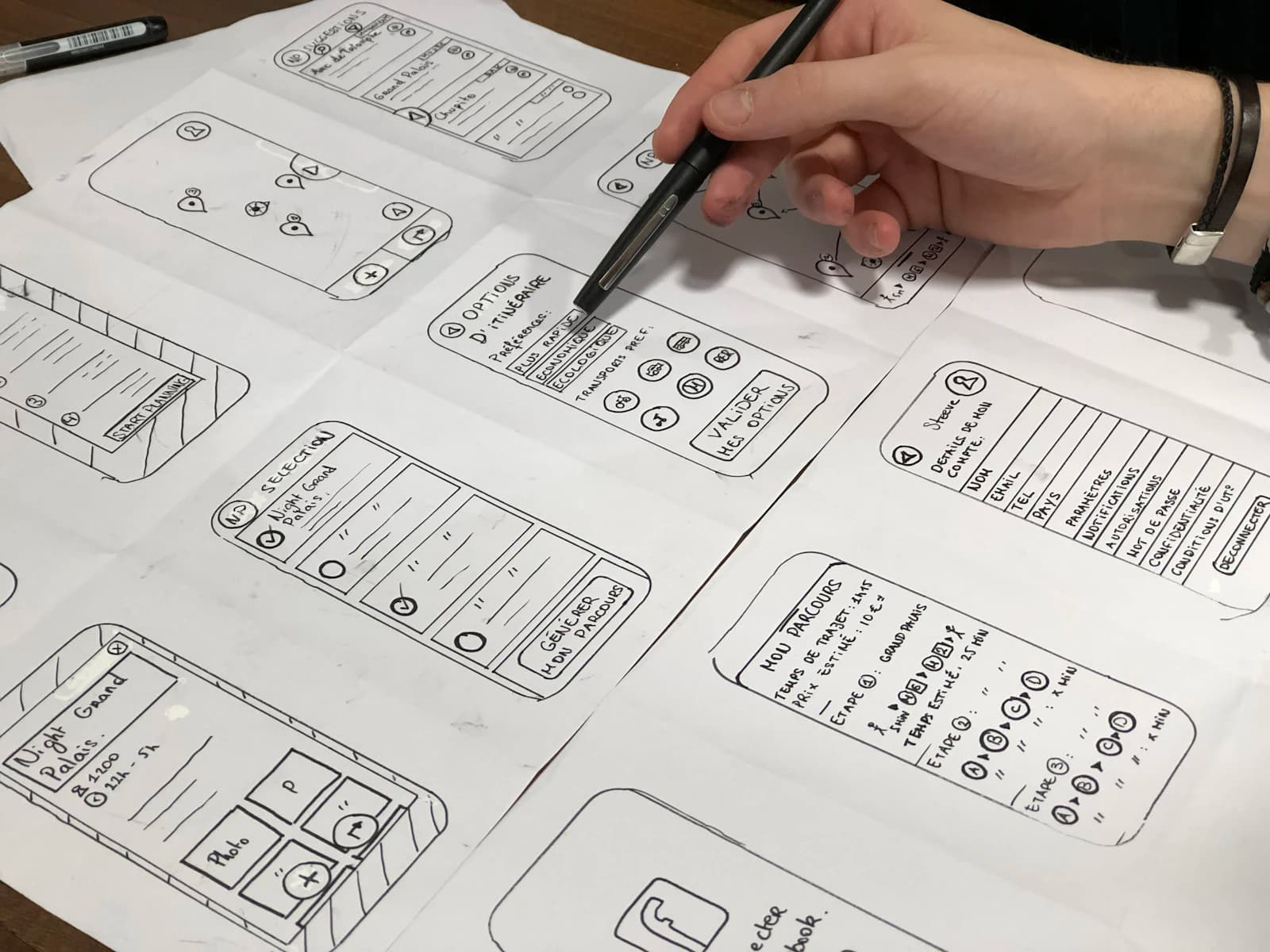
MVP Feature Prioritisation: RICE, MoSCoW, and Risk Mapping Before Development
Prioritise MVP app features with RICE, MoSCoW, risk mapping, user journeys, and delivery constraints before committing to development.


On this page
- Start With the Decision, Not the Deliverable
- What Good Work Looks Like in Practice
- Plan for the Operating Context, Not a Perfect Demo
- A Working Example
- Questions to Settle Before Scope Is Approved
- Scope the First Responsible Version
- A Practical Working Sequence
- Outputs That Make Implementation Easier
- Risks to Surface Before the Work Moves Forward
- Connect This Guide to the Wider Delivery Cluster
MVP scope fails when every requested feature is described as essential. The resulting product may have sign-in, dashboards, notifications, messaging, payments, reporting, roles, and integrations, yet still fail to prove the one user behaviour or business workflow it was meant to improve. Prioritisation is how a team protects the first release from that outcome.
This guide supports Scallar's mobile app development service. It is deliberately a supporting decision guide, not a replacement for the commercial service page. Use it when the next step is unclear, then bring the agreed scope, evidence, constraints, and owners into a delivery conversation.
Start With the Decision, Not the Deliverable
Feature prioritisation should decide which capability must exist for a target user to complete the primary workflow, which work reduces the greatest delivery or adoption risk, and which requests should wait until real use provides better evidence. RICE, MoSCoW, and risk mapping are useful frameworks, but they only help when the team has agreed on the user, the outcome, and the decision owner.
The practical question is not whether the team can make a document, prototype, checklist, or set of screens. It is whether that work will reduce an important uncertainty before time is spent on the wrong scope. A useful working brief records the target user, the job they are trying to complete, the business or operating outcome, existing evidence, dependencies, and the point at which a decision must be made.
This approach prevents two familiar problems. The first is a polished output that answers no real question. The second is a long list of requests that is treated as a final specification even though no one has agreed which task matters first. Both create later rework for design, engineering, operations, and the people expected to support the result.
What Good Work Looks Like in Practice
Start with a journey, then turn each requested feature into a testable capability. Use MoSCoW to separate must-have, should-have, could-have, and not-now items. Use RICE as a discussion aid for reach, impact, confidence, and effort, rather than false precision. Add a risk map for dependencies such as data, integrations, permissions, performance, compliance review, staff adoption, and store release. A high-risk capability may deserve an early technical or design test even when it does not appear first in a feature vote.
Work from real examples wherever possible: recent customer messages, support tickets, sales-call notes, live forms, existing reports, source data, recordings obtained with consent, or a current operational process. Hypothetical answers are useful only when they are clearly labelled as assumptions. The team should be able to distinguish a confirmed constraint from a preference and a preference from an untested idea.
A strong delivery process also creates a visible trail from evidence to action. When a stakeholder asks why a field, flow, component, requirement, or testing step is included, the team should be able to point to the user task, business rule, technical dependency, accessibility need, operational requirement, or release risk behind it.
Plan for the Operating Context, Not a Perfect Demo
A customer-facing app and an internal operations app have different priorities. A customer app may need trust, onboarding, mobile clarity, support, and consent before advanced analytics. An internal app may need role-based access, source-data accuracy, offline handling, audit history, and operational handoff. Make those differences explicit instead of copying a generic MVP feature list.
Most avoidable product and website problems live outside the happy path. Users arrive with incomplete information, slow connections, different devices, permissions they do not understand, a need to pause a task, or a question that requires human help. Internal teams may have different roles, data access, approval responsibilities, and incentives. A sound plan names those conditions early instead of adding them after the main interface or build has already been approved.
This also means connecting experience work to the systems around it. A form, app, dashboard, or checkout is not complete when it displays a confirmation state. Someone must own the resulting record, respond when an exception occurs, maintain integrations, interpret measurements, and explain the next step to the customer. Where the flow continues into sales or operations, the right design decision may involve CRM automation, data analytics, or WhatsApp automation, not only a visual change.
A Working Example
Consider an illustrative property-management team planning an app for tenants, maintenance staff, and supervisors. The first draft includes messaging, payments, maintenance requests, document storage, scheduling, dashboards, notifications, and loyalty features. A prioritisation workshop would start by asking what the first release must prove. If the immediate problem is that urgent maintenance requests are poorly recorded and assigned, the MVP may only need authenticated request creation, photos, location or property reference, a clear status, assignment, and an accountable exception path.
The team can then assess each additional feature against that workflow. Messaging may be valuable, but perhaps an existing communication channel can be linked in the first release. Payment may require a separate security, reconciliation, and support decision. A dashboard may be deferred until enough reliable request data exists. Notifications may be included only for assignment and status changes that are essential to the workflow. This is not a claim that every property app should be small; it is a way to make scope answer the problem being funded.
The workshop should also log delivery risk. If a maintenance system already holds the source records, integrating it may be more important than adding another interface feature. If different properties use different assignment rules, the team may need a configuration decision before build. The final scope tells stakeholders what the release will do, what it will deliberately not do, and what evidence will decide the next investment.
This is an illustrative delivery pattern, not a client-result claim. Its purpose is to make the decision concrete before a team commits to a particular interface, release, integration, or tool. In a real engagement, the detail should be verified against the organisation's users, data, systems, responsibilities, contractual needs, and delivery constraints.
Questions to Settle Before Scope Is Approved
Before the work moves from discovery into implementation, make the decision record explicit. What is the user outcome? Which person or team owns it after launch? What evidence supports the current approach, and what is still an assumption? Which data, content, component, integration, policy, or approval is a dependency? What failure state needs a human response? Finally, how will the team know that the work is useful once it is live?
These questions are deliberately practical. They turn a broad request into a set of accountable choices for design, engineering, operations, and leadership. They also prevent a buyer from paying for a large deliverable before the team has agreed on what success, acceptance, support, and future change should look like.
Scope the First Responsible Version
Teams can usually reduce risk by agreeing a first responsible version of the work. It includes enough research, design, technical validation, content, quality assurance, and operational ownership for the selected journey to work as intended. It does not have to solve every future use case on day one. What matters is that the boundary is visible: what is included, what is intentionally deferred, what depends on another owner, and what evidence will trigger the next phase.
This keeps commercial discussions straightforward. A buyer can compare proposed work using the problems it addresses, the decisions it makes, the dependencies it exposes, the handover it leaves behind, and the support it assumes. A delivery team can then estimate responsibly without pretending that a discovery question has already been answered. The result is a more useful route from an initial guide to a scoped, testable engagement.
A Practical Working Sequence
Use the following sequence as a starting point. It is intentionally adaptable: a focused improvement may move through it quickly, while a new product or regulated workflow may need deeper review.
- Define the primary user, task, and measurable first-release outcome.
- Group feature requests by the journey or operating rule they support.
- Use MoSCoW to establish boundaries and RICE to compare meaningful options.
- Map delivery, data, integration, adoption, and release risks.
- Publish an MVP scope, deferred list, decision log, and next validation step.
At each stage, record the decision owner and the evidence that would change the current direction. This keeps feedback useful. Instead of a large review meeting where every participant offers a preference, the team can ask whether a suggestion improves the agreed task, reduces a known risk, satisfies a business rule, or should be recorded for a later release.
Outputs That Make Implementation Easier
The priority output should show the first release, deferred releases, assumptions, dependencies, and the evidence that would change a decision. Pair it with a clear product brief and acceptance criteria. The mobile app PRD template explains how the selected capabilities become requirements that design, engineering, and QA can use.
The output should be usable by the next person in the chain. A designer needs clear priorities and states. An engineer needs behaviour, constraints, data contracts, and acceptance criteria. QA needs testable conditions. A product owner needs a way to decide what changes next. Operations needs ownership and an exception path. A buyer needs enough transparency to understand what is included and what depends on discovery.
A proportionate engagement may produce:
- MVP feature inventory and prioritisation rationale
- RICE, MoSCoW, and risk-map working sheet
- First-release scope with explicit deferrals
- Validation plan and decision log for the next release
Do not treat the list as a fixed menu. The right deliverables follow the risk. For example, a high-stakes registration flow may need content, permissions, validation, accessibility, and integration review before visual refinement. A proven internal workflow may only need a focused interface pattern and implementation QA. The work is valuable when it makes the next release safer and more useful, not when it creates the most artefacts.
Risks to Surface Before the Work Moves Forward
The major risks are scoring features before agreeing on the journey, treating stakeholder seniority as priority, ignoring technical uncertainty, keeping all "should-have" items in scope, and adding a roadmap without measurement. Protect the release by making the primary user outcome and scope boundary visible in every prioritisation review.
Risk review should be specific. It is better to state that an API owner has not confirmed a data field, that a consent decision needs legal input, or that a sales team has no agreed follow-up owner than to hide the issue inside a generic dependency list. Make the decision visible, assign an owner, and decide whether it blocks the current release or can be managed with a staged approach.
For web and product experiences, accessibility is part of that risk review. Automated checks are helpful but incomplete. The W3C evaluation guidance recommends combining tools with knowledgeable human review of structure and real tasks. The appropriate level of review depends on users, context, and obligations, but it should be planned before launch rather than deferred until a customer reports a problem.
Connect This Guide to the Wider Delivery Cluster
This topic is one part of a connected delivery system. Relevant next steps include mobile app PRD template, MVP app development guide, native versus cross-platform guide, UI/UX research plan. Read the guide that matches the next decision rather than treating every article as a separate service. That keeps the main service hub authoritative, prevents content cannibalisation, and gives buyers a clear route from research to scope, implementation, and support.
When the work is ready to move beyond a guide, bring the current process, target user, evidence, systems, owners, and launch constraints to Scallar's contact page. A short discovery conversation can establish whether the right next step is a focused audit, a design or technical spike, a product brief, an implementation plan, or a phased delivery engagement.
Questions Buyers Usually Ask
What is MVP feature prioritisation?
It is the process of selecting the smallest responsible set of capabilities that lets a target user complete a valuable task and lets the business test a specific product or operating assumption.
Should we use RICE or MoSCoW?
Use them together when helpful. MoSCoW establishes scope boundaries, while RICE helps compare reach, impact, confidence, and effort. Neither replaces product judgement or technical risk review.
What is risk mapping in an MVP?
Risk mapping identifies the assumptions that could make a feature hard to deliver, adopt, secure, support, or measure. It helps the team test the most important uncertainty early.
Can an MVP include integrations?
Yes, when an integration is required for the core workflow. Scope the data, owner, error handling, security, and test plan rather than treating the integration as a late add-on.
Related service
App Development
Native and cross-platform mobile applications for iOS and Android.