MVP App Development Services in India: Scope, Cost, and Delivery Guide
A buyer guide to MVP app development in India: feature scope, product discovery, UX, technology choices, QA, launch, ownership, and agency evaluation.

On this page
- What an MVP App Development Engagement Covers
- Start With the Hypothesis, User, and Outcome
- Scope Features Around the End-to-End Journey
- Design Before Engineering Commitment
- Select Technology for the Product You Need Now
- Integrations and Data Need Early Planning
- QA and Launch Are Part of Product Delivery
- How to Evaluate an MVP App Development Company
- Cost Factors and a Responsible MVP Budget
An MVP is not a small version of every idea in the roadmap. It is the smallest responsible product release that can test a real customer, operational, or commercial assumption. That distinction matters because a rushed "minimum viable" build often becomes a collection of incomplete features with unclear users, no measurement plan, fragile integrations, and no sensible route from feedback to the next release.
Good MVP app development begins by reducing uncertainty. What user problem is worth solving first? Who will use the product? What must happen for them to receive value? What must the business learn after launch? Which risks are technical, operational, commercial, or regulatory? Scallar's app development services help teams turn those questions into a buildable first release. For related choices, read the mobile app development company buyer guide, native vs cross-platform app guide, and app development pricing guide.
What an MVP App Development Engagement Covers
MVP app development can include product discovery, user and workflow research, requirements definition, information architecture, UX and UI design, technical architecture, frontend and backend engineering, API integration, authentication, data modelling, notifications, QA, analytics, deployment, app-store preparation, monitoring, and handover. The exact mix depends on the product and the risk being tested.
A marketplace MVP is different from a field-service application, a healthcare booking flow, an internal operations tool, or a customer self-service app. Each has different user roles, workflows, data, device needs, integrations, privacy considerations, and adoption risks. The useful first question is not "How many screens?" It is "What end-to-end task must work well enough for a real user to achieve value?"
For example, a service marketplace may need sign-up, service discovery, booking, payment, provider notification, and basic support. A B2B workflow product may need roles, account setup, lead or task management, one key integration, and reporting for an administrator. A delivery or field app may need job assignment, offline considerations, proof of completion, and supervisor visibility. Features that do not contribute to the first learning goal should be deferred unless they are necessary for safety, compliance, or a reliable user journey.
Start With the Hypothesis, User, and Outcome
Write down what the MVP is intended to prove. It might test whether a target customer will complete a booking without calling, whether a sales team will adopt a structured lead workflow, whether users will pay for a specific capability, or whether a fragmented operational task can be completed faster with a mobile interface. The hypothesis must be specific enough to inform what is built and what is measured.
Define the primary user and the core job they are trying to complete. Be careful with teams that call everyone the user. Customers, administrators, sales staff, delivery partners, managers, and support agents may all interact with the system, but the first release should not try to optimise every role equally. Identify the role whose success is necessary to validate the product.
Then describe the desired outcome in observable terms. Instead of "make onboarding easy," define the first useful action and the conditions needed to complete it. Instead of "improve lead management," define how a lead is captured, assigned, followed up, and reviewed. This turns a vague product goal into a realistic workflow that designers, developers, and stakeholders can evaluate together.
Scope Features Around the End-to-End Journey
Feature lists grow because each stakeholder can name something useful. An MVP needs a disciplined rule for prioritising those requests. Map the end-to-end journey, identify the critical path, and classify every feature as essential to the first user outcome, helpful but deferrable, or unrelated to the present hypothesis.
An essential feature enables a user to finish the central job, protects a requirement such as authentication or data integrity, or lets the business observe the result. A deferrable feature may improve convenience, customisation, or scale, but it is not required for the first release. An unrelated feature might be valuable eventually but belongs to another product or audience.
Use a clear decision log. For every deferred item, record the user problem, requested value, dependency, estimated complexity, and condition that would justify revisiting it. This reassures stakeholders that an idea is not being dismissed permanently while protecting the delivery focus. It also makes the first post-launch roadmap evidence-led instead of driven by the loudest request.
Design Before Engineering Commitment
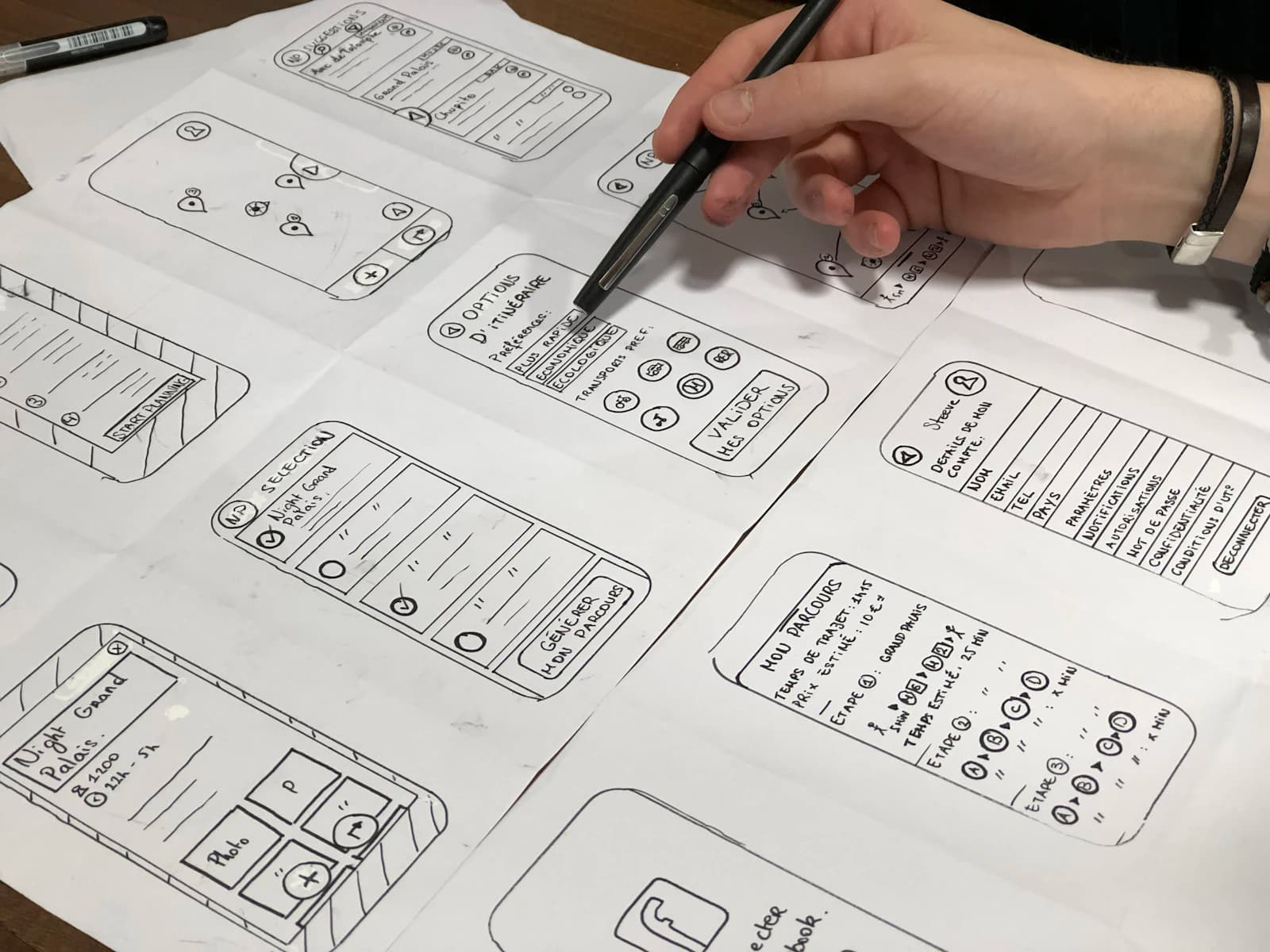
Product discovery and UX design are not decoration phases. They expose confusing tasks, missing states, data requirements, role differences, integration assumptions, and accessibility needs before they become expensive code. A good MVP design process tests the important journey at a level appropriate to the risk: sketches, flows, wireframes, clickable prototypes, or a more complete interface system.
The design should include normal, empty, loading, error, success, permission, and interruption states. Many products work well in the happy-path demo but become difficult to use when a network fails, a record is missing, an approval is delayed, or a customer changes an input. Document those conditions before development starts.
For a product with repeated workflows or a planned second release, establish a lightweight component system. This makes the initial interface more consistent and gives future work a stable starting point. The UI/UX design process guide explains how research, flows, interface decisions, testing, and handoff can be coordinated without treating design as an isolated step.
Select Technology for the Product You Need Now
Technology choices should support the MVP's user journey, integration needs, security expectations, operating environment, team skills, budget, and likely direction after validation. Native development can be appropriate when platform-specific performance, hardware features, or interaction quality are central. Cross-platform development can be a practical choice when the product needs Android and iOS coverage with a shared codebase and the requirements fit the approach. The Flutter vs React Native guide and Android vs iOS planning guide help teams frame that choice.
Backend decisions matter as much as the mobile client. Identify the required authentication, roles, data model, integrations, notifications, file handling, reporting, and admin needs. Use managed services where they reduce operational risk, but understand the account ownership, costs, limits, export options, and responsibilities. Do not build a complex custom backend merely because it sounds more serious; equally, do not use a shortcut that cannot support the essential workflow or safe data handling.
Document the architecture and account ownership from the beginning. The business should know where code lives, who controls cloud accounts, how releases are made, where credentials are stored, how backups work, and how another team could take over. Ownership is an MVP requirement, not a later administrative task.
Integrations and Data Need Early Planning
Many MVPs are valuable because they connect a new user interface to an existing business process. That may mean CRM, payments, maps, messaging, inventory, calendar, accounting, identity, analytics, or support software. Each integration has data fields, error states, permissions, rate limits, reliability concerns, and vendor dependencies.
Map the key data events before coding. Which action creates a record? Which system is the source of truth? Who can edit the record? What happens if an API is unavailable? Which notification should be sent? What personal data is stored or exposed? What needs to appear in an admin or support view? Designing these flows early avoids a common failure mode where the mobile experience looks complete but staff must still copy information manually between systems.
When the product needs lead capture or post-enquiry follow-up, connect the app scope with CRM automation or WhatsApp automation rather than leaving the handoff as an unowned export. The same principle applies to analytics: define the events and decisions that will be measured, then validate that they are being captured correctly before relying on a launch report.
QA and Launch Are Part of Product Delivery
Testing is not a final sprint after development is declared complete. Quality assurance should cover the core workflows, role permissions, validation, integrations, errors, device sizes, operating-system versions, connectivity conditions, performance, accessibility basics, security-sensitive paths, and analytics events. The mobile app testing checklist provides a detailed starting point.
Plan the launch model: internal pilot, limited customer cohort, staged rollout, or public app-store release. A smaller launch can generate useful feedback while limiting operational risk. Establish a feedback path, support owner, incident process, monitoring, and a way to separate a usability issue from a feature request. Then decide what evidence will determine the next release.
App-store submission is one part of launch, not proof that the product is ready. Confirm descriptions, privacy disclosures, support contact, screenshots, consent requirements, store accounts, signing credentials, crash monitoring, and rollback options. More importantly, ensure the organisation can respond when users encounter a real problem.
How to Evaluate an MVP App Development Company
Choose a partner that can explain how it will reduce uncertainty, not just how quickly it can start coding. A capable app development company asks about users, operating processes, desired outcomes, data, integrations, stakeholders, security, support, decision rights, and what happens after the first release. It should distinguish discovery, design, development, QA, launch, and support in its scope.
Ask potential partners:
- Which hypothesis and user journey will the MVP test first?
- How will scope decisions and deferred features be documented?
- What design, technical, and integration assumptions need validation?
- How will you test the product before and after launch?
- Which accounts, code, documentation, and environments will we own?
- What support and maintenance model applies after the first release?
Avoid agencies that promise a full product from a short feature list without discussing users, edge cases, data, integrations, or ownership. A fast estimate can be useful for planning, but responsible delivery requires discovery before commitments become final.
Cost Factors and a Responsible MVP Budget
MVP app development cost depends on discovery depth, number of roles, user journeys, platform choices, UX design, backend and admin requirements, integrations, authentication, data sensitivity, testing, analytics, deployment, and support. The app development cost guide gives a fuller view of the variables. Use it to compare scope assumptions rather than treating a single price as a complete answer.
Start with a release that solves one meaningful workflow and generates evidence for the next decision. Budget for design, QA, launch preparation, monitoring, and ownership alongside feature development. The mobile app maintenance guide is important because support, store changes, dependencies, security updates, and integrations continue after the first launch.
If you are evaluating MVP app development services in India, contact Scallar with the user problem, first workflow, audience, target platforms, existing systems, data requirements, launch plan, and who will own the product internally. We can help translate that into a discovery plan and staged product scope.
Questions Buyers Usually Ask
What is MVP app development?
It is the development of the smallest responsible product release that can help a real user complete a valuable task and help the business test a defined assumption before expanding the roadmap.
How many features should an MVP include?
Include the features needed for the primary user to complete the core workflow safely and for the business to learn from the result. Everything else should be assessed against the current hypothesis and deferred where possible.
Should an MVP be native or cross-platform?
The answer depends on platform requirements, performance needs, hardware features, user experience, timeline, team skills, and future roadmap. Neither option is automatically better for every product.
Can an MVP integrate with our CRM or existing software?
Yes. Integration scope should be decided early so the data source, ownership, error handling, permissions, and handoff are designed into the workflow rather than added as an afterthought.
How do we know whether an MVP succeeded?
Define the success condition before launch: completion of a core task, repeat use, conversion, operational time saved, successful handoff, or another measurable behaviour connected to the product hypothesis.
What happens after the MVP launches?
Review real usage, support feedback, analytics, reliability, and business outcomes. Use that evidence to stabilise the product, improve the core journey, and prioritise the next release rather than immediately adding every requested feature.
Related service
App Development
Native and cross-platform mobile applications for iOS and Android.